

PSI India Supports Government Efforts for World Contraception Day 2025 Across Five States
Contributors: Amit Kumar, Saurav Tiwari, Prabhat Kumar Jha, Nilesh Kumar, Deepti Mathur, Parul Saxena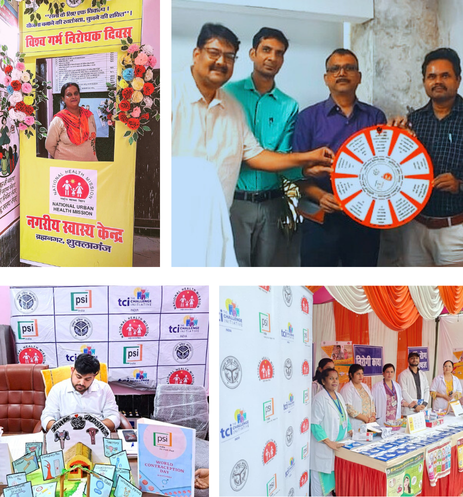
PSI India played a key role in supporting the government’s World Contraception Day (WCD) efforts to raise awareness and empower individuals to make informed contraceptive choices.

On WCD, we emphasize the importance of family planning in building healthier communities. Improving contraceptive awareness and access reduces unintended pregnancies and strengthens maternal and child health. It also promotes gender equality and sustainable development. Let us break barriers and support informed choices for a more empowered future.”
Dr. Muralidhar Padhi
Additional Director, Maternal Health, Directorate of Family Welfare, Odisha
PSI India teams across five states- Uttar Pradesh, Bihar, Jharkhand, Madhya Pradesh, and Odisha, through The Challenge Initiative India, BMGF Family Planning, and Newer Contraceptive Projects, worked closely with state and district authorities to plan and implement WCD activities. These planning meetings ensured adequate contraceptive supplies, finalized communication strategies, and aligned activities with the Swasth Nari Sashakt Parivar Abhiyaan (Healthy Woman, Empowered Family Campaign), a Government of India initiative held from September 17 to October 2 to empower women and strengthen families through better health.
Under the capacity-building efforts, PSI India supported Health & Wellness Centers by coaching staff on client-centered counselling, method-specific knowledge, and ensuring informed choice. Refresher sessions for hospital staff emphasized focussing on postpartum and post-abortion contraception.
Accredited Social Health Activists (ASHAs) and Auxiliary Nurse Midwives (ANMs) were reoriented to identify eligible couples, provide information on basket of choice and make timely referrals to appropriate health facilities.
To support counselling, PSI India developed an innovative Family Planning SPIN Wheel in Hindi to dispel myths in a simple, engaging, and interactive way. The tool was appreciated by state officials and displayed prominently at health facilities to spark meaningful conversations.
On the main event day, 26th September, district-level inaugurations saw participation from Ministers, District Magistrates, senior health officials, community representatives, and development partners. Health facilities showcased the “Basket of Choice,” set up attractive family planning corners, and creatively displayed IEC materials and contraceptives to engage clients.
Group meetings at health facilities created opportunities for open dialogue, allowing service providers to address concerns about side effects and correct common myths about contraceptive methods. PSI India also supported health facilities in organizing special Fixed-Day Static services on WCD, ensuring wider access to both short-acting and long-acting methods.
Male engagement was prioritized, with service providers and ASHAs counselling eligible men on condoms, No-Scalpel Vasectomy, and shared family planning responsibility. School-based orientations further equipped adolescents with essential knowledge on reproductive health and contraception.
Through these coordinated efforts, PSI India supported the government in strengthening community awareness, acceptance and access of modern contraceptive methods, contributing to healthier and more empowered families across the five states.
SBIF-Maatrichhaya Launched to Advancing Maternal and Neonatal Health in Uttar Pradesh
Contributors: Nitin Kumar Dwivedi, Deepti Mathur, Parul Saxena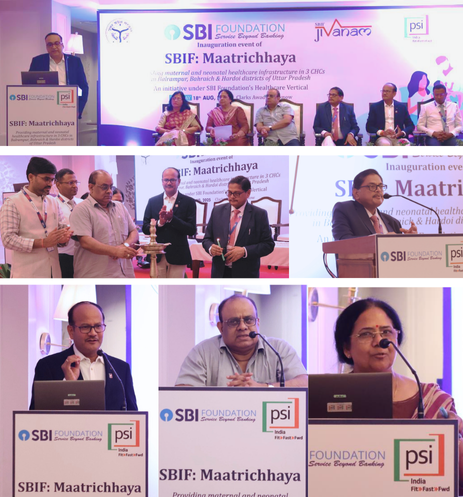
The SBIF-Maatrichhaya project was launched in collaboration with Directorate of Health & Family Welfare and the National Health Mission (NHM), Government of Uttar Pradesh on August 18, 2025, in Lucknow. The event brought together over 55 key stakeholders, including senior health officials, district medical officers, development partners, and representatives from international organizations.
SBIF-Maatrichhaya initiatives are designed to complement government programs, extending the reach of quality, timely maternal health services to underserved communities.”
Mr. Sanjay Prakash
Managing Director & CEO, SBI Foundation
The launch was graced by Dr. Dinesh Kumar, Director General, Health & Family Welfare, Government of Uttar Pradesh, as Chief Guest, with Dr. Sharda Chaudhary, Director–MCH, as Special Guest, and Mr. Sanjay Prakash, Managing Director & CEO of SBIF, as Guest of Honour.
Speaking at the event, PSI India’s Executive Director, Mukesh Kumar Sharma, emphasized that the partnership between SBIF and PSI India represents a major step forward in strengthening maternal and neonatal health infrastructure across three priority districts. He highlighted the need to improve both the quality and reach of services so that every mother and newborn receives safe, dignified and respectful care.
Hitesh Sahni, Director–Programs, PSI India, shared an overview of the SBIF–Maatrichhaya project and its objectives, which include upgrading labour rooms in alignment with national quality standards, installing essential medical equipment, and training paramedical staff to ensure skilled, compassionate, and respectful delivery care. Through these interventions, the project aims to create model facilities that can demonstrate improved maternal care pathways and set benchmarks for replication.
Dr. Sharda Chaudhary expressed confidence that the SBIF–Maatrichhaya initiative would strengthen labour rooms in intervention facilities, equip service providers with improved counselling skills, and help connect pregnant women to timely and quality healthcare.
Adding to the discussion, Dr. Shamita Pradhan, Deputy GM, MH Program, SPMU, NHM Uttar Pradesh, shared progress under various government schemes. She emphasized the continued need for upgraded facilities, trained staff, and positive attitudinal shifts among health personnel to ensure respectful maternity care.
SBIF’s MD & CEO, Mr. Sanjay Prakash, emphasized that the Foundation’s support through modern equipment and system strengthening is intended to enhance healthcare quality and outcomes in the most vulnerable regions.
The SBIF–Maatrichhaya project stands as a significant step toward PSI India’s mission of health system strengthening.
PSI India Support to World Breastfeeding Week 2025: Strengthening Nutrition, Immunity & Health
Contributors: Mohammad Rizwan, Anil Kumar Dwivedi, Amit Kumar, Deepti Mathur, Parul Saxena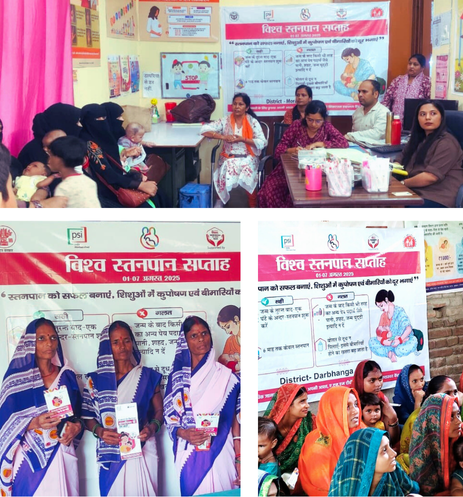
The Diarrhoea Se Darr Nahi team of PSI India worked closely with the government to support World Breastfeeding Week 2025 (1–7 August) across intervention districts in Uttar Pradesh. The week-long activities raised awareness on the vital role of breastfeeding in ensuring optimal nutrition and strong immunity for infants and young children.
I had stopped exclusively breastfeeding my baby because I felt my milk wasn’t enough. During a group meeting, ASHA didi explained that exclusive breastfeeding is one of the most powerful ways to protect a child’s health. I realised my mistake. Now, I will exclusively breastfeed my baby until he completes six months.”
Rekha
a young mother from Moradabad, Uttar Pradesh
Throughout the week, health staff, frontline workers, and community influencers engaged families through counselling sessions, mothers’ group meetings and home visits. These interactions focused on dispelling common myths and reinforcing evidence-based practices that support healthy child growth.
Mothers were encouraged to initiate breastfeeding within the first hour of birth, a critical step that provides newborns with colostrum. The importance of exclusive breastfeeding for the first six months was strongly emphasized, helping families understand how it prevents from diarrhoea and pneumonia while ensuring optimal nutrition.
Frontline workers also highlighted the need for continued breastfeeding up to two years or beyond, along with timely and appropriate complementary feeding after six months.
PSI India team ensured that messages aligned with Government of India guidelines reached thousands of beneficiaries, reinforcing breastfeeding as one of the most effective and natural ways to protect children from malnutrition and common illnesses, especially diarrhoea.
State-Level Dissemination Workshop on World ORS Day 2025
Contributors: Anil Kumar Dwivedi, Amit Kumar, Deepti Mathur, Parul Saxena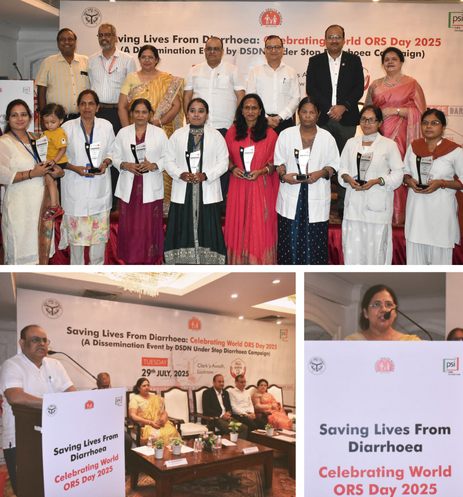
On the occasion of World ORS Day on 29th July 2025, PSI India, in collaboration with the Directorate of Health & Family Welfare and the National Health Mission (NHM), Government of Uttar Pradesh, organized a state-level dissemination workshop under its public health initiative ‘Diarrhoea Se Darr Nahi’, supported by Kenvue. The event was graced by Dr. Dinesh Kumar, Director General, Directorate of Health & Family Welfare, Government of Uttar Pradesh, as the Chief Guest.
By raising awareness and driving grassroots action, we can defeat diarrhoea and protect our children’s future. I commend PSI India for their support to Stop Diarrhoea Campaign. Together, we are not just treating illness, we are transforming public health.”
Dr. Dinesh Kumar
Director General – Directorate Health & Family Welfare, Government of Uttar Pradesh
The state-level dissemination workshop brought together more than 63 stakeholders, including government officials, healthcare experts, development partners, and frontline workers, in a collective effort to advance diarrhoea prevention and management in Uttar Pradesh.
Dr. Milind Wardhan, General Manager – Child Health, NHM, presented the state’s ‘Stop Diarrhoea Campaign’ plan, conducted from June 16 to July 31, 2025. He emphasized that the campaign aims for zero childhood deaths due to diarrhoea by ensuring correct use of ORS and zinc, strengthening caregiver knowledge, and prioritizing underserved communities where the burden remains high.
Dr. Dinesh Kumar, Director General – Directorate Health & Family Welfare, Government of Uttar Pradesh acknowledged the importance of empowering communities to reduce preventable childhood illnesses.
A felicitation ceremony celebrated the exceptional efforts of service providers and community health workers from Lucknow who played a pivotal role in promoting ORS and zinc usage and ensuring timely case management.
Additional Director RCH, Dr. Sharda Chaudhary stressed the urgent need to strengthen community awareness about ORS as a life-saving solution and called for a mission-mode awareness drive using mass media, interpersonal communication, and diverse IEC tools.
Dr. Shalini Bhasin, President of the Indian Academy of Pediatrics, Lucknow Chapter, advocated for ORS availability in all emergency kits, especially in public spaces.
PSI India’s Deputy Director, Samarendra Behera, emphasized that diarrhoea is entirely manageable when addressed promptly, but neglect can have serious consequences for children. Amit Kumar, Uttar Pradesh State Head – Operations, PSI India, along with Senior Program Manager Anil Kumar Dwivedi, presented PSI India’s approach under the Diarrhoea Se Darr Nahi initiative. They explained how the project focuses on early detection, timely management, and improved treatment practices through capacity building of public and private healthcare providers as well as community health workers.
The workshop concluded with Dr. Milind Wardhan expressing heartfelt appreciation for all partners, health workers, and experts who continue to advance Uttar Pradesh’s commitment to eliminating child deaths due to diarrhoea.
Stop Diarrhoea Campaign 2025: Collective Action for Community Well-being
Contributors: Anil Kumar Dwivedi, Amit Kumar, Saurav Tiwari, Deepti Mathur, Parul Saxena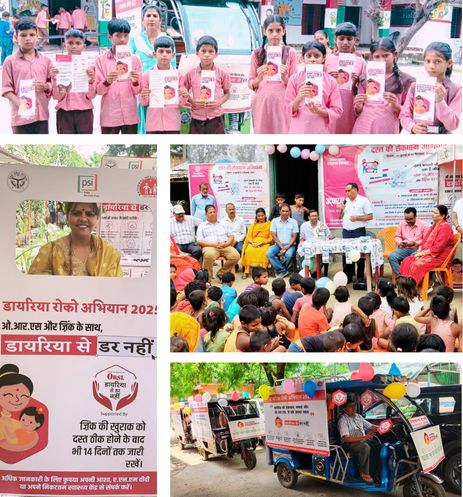
The Stop Diarrhoea Campaign 2025, conducted nationwide from mid-June to the end of July by the Government of India, mobilized a coordinated public health response to reduce diarrhoeal disease during the monsoon season. PSI India supported these efforts in intervention districts of Uttar Pradesh and Bihar through its “Diarrhoea Se Darr Nahi” initiative, working closely with government to strengthen preparedness, outreach, and community engagement.
Diarrhoea is preventable and curable, yet millions, especially children, die each year due to low awareness and limited ORS use. Kenvue, in partnership with PSI India under the ‘Diarrhoea Se Darr Nahi’ initiative, aims to strengthen ORS coverage in Uttar Pradesh and Bihar through capacity building of community health workers and driving partnership with healthcare ecosystem.”
Manish Anandani
Managing Director, India, Kenvue
Preparations began with micro-planning for high-risk slum pockets and development of IEC materials such as posters, leaflets, radio jingles, and scripts for street plays. More than 10,000 frontline workers were trained on prevention, management, and effective communication around diarrhoea.
The “Diarrhoea Se Darr Nahi” Prachar Vahan, an outreach van designed to spread awareness across communities was launched by Shri Awdesh Narayan Singh, Hon’ble Member, Bihar Legislative Council; Shri Mangal Pandey, Hon’ble Health Minister, Bihar and Dr. Pinki Jowel (IAS), Mission Director, National Health Mission (NHM), Uttar Pradesh. A signature campaign further encouraged collective commitment from stakeholders, while IEC and communication materials were unveiled to amplify awareness on prevention, causes, and early treatment of diarrhoea.
Dr. Pinki Jowel (IAS), Mission Director, NHM Uttar Pradesh, said- “Our goal is not just to promote the use of ORS and zinc, but to build a culture of health awareness, one that recognizes the importance of prevention and timely care.”
Media coverage, including NDTV interviews with senior NHM officials and the Executive Director of PSI India, further strengthened the campaign’s visibility.
In all intervention districts, District Magistrates, Chief Medical Officers, Civil Surgeon and elected representatives flagged off Prachar Vahans—e-rickshaws equipped with posters, banners, and audio messages. Community rallies, where organized, added enthusiasm and ensured widespread visibility. Alongside, ORS and Zinc Corners were established in public and private facilities, schools, Anganwadi Centres, and community spaces. Decorated with rangoli, posters, and selfie cut-outs, these corners attracted families and offered live demonstrations on correct ORS preparation. By the end of the campaign, 1,575 ORS corners were functional in public facilities and 38 in private facilities.
Accredited Social Health Activist (ASHA), Auxiliary Nurse Midwife (ANM), and Community Health Officer (CHO), conducted door-to-door visits distributed ORS packets and zinc tablets and demonstrated how to prepare ORS correctly. Engaging IEC materials including posters, diaries, standees, snakes-and-ladders games, and selfie frames were extensively used during outreach
Complementing these interpersonal efforts, radio stations - Akashvani, Fever FM, and Community Radio broadcast awareness messages. To visually reinforce preventive behaviours, nearly 650 wall paintings were created in prominent public locations such as markets, health centres, schools, and panchayat offices.
Street plays in markets and community areas became crucial crowd-pullers, blending entertainment with awareness messages. Schools also played an active part by organizing rallies, quizzes, poster competitions, encouraging children to act as ambassadors of change.
The Stop Diarrhoea Campaign 2025 in Uttar Pradesh and Bihar strengthened awareness, improved access to treatment, and built a culture of prevention to reduce childhood diarrhoeal disease.
“Diarrhoea Se Darr Nahi” Launched
Contributors: Deepti Mathur, Jim W Kasom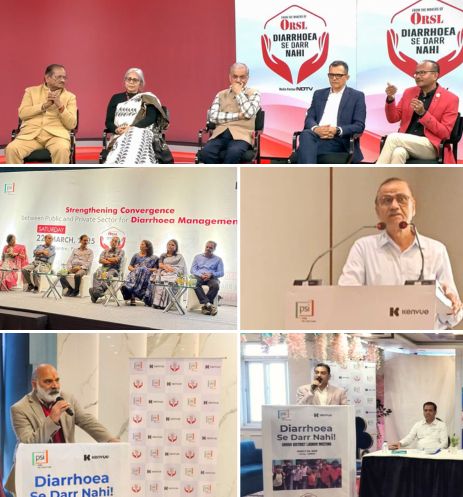
PSI India supported by Kenvue, launched the “Diarrhoea Se Darr Nahi” (DSDN) program to support the government’s diarrhoea prevention and management campaign. The initiative aims to empower communities by raising awareness and enable health facilities to manage childhood diarrhoea.
Ye Suraksha Ka Hi Ghera Hai, Sirf Ek Ghar Nahi!! Sahi Soochna Sang ORS Ho, To Diarrhoea Se Darr Nahi!
Mukesh Kumar Sharma
Executive Director of PSI India
Childhood diarrhoea remains a significant health challenge in India, contributing substantially to child morbidity and mortality, with 5.8% of deaths in this age group attributed to diarrhoeal diseases (Cause of Death Statistics 2017-19, Sample Registration System of Registrar General of India). In a ground-breaking initiative, PSI India supported by Kenvue, launched the “Diarrhoea Se Darr Nahi” program to support the government’s Diarrhoea prevention and management campaign. The initiative is a crucial step in supporting the government’s ongoing efforts through the National STOP Diarrhoea Campaign, which was launched on June 24, 2024, by the Union Health Minister Shri J.P. Nadda, to eliminate child deaths due to diarrhoea.
With city governments, DSDN program was first launched in Firozabad on 6th February 2025, and subsequently rolled out across six other districts of Uttar Pradesh—Budaun, Moradabad, Mathura, Unnao, Gonda, and Shravasti and in Purnia, and Darbhanga, districts of Bihar. All these districts being high prevalence districts were selected in consultation with the government senior health officials. Chief Medical Officers, Civil Surgeons, Additional Chief Medical Officers, Integrated Child Development Scheme officials, key district-level stakeholders, representatives from PSI India and other development partners participated in the launch events fostering a collaborative environment, enabling focused discussions on strategies for the prevention, early identification, and effective treatment of diarrhoea.
During the National launch broadcast on 27th February 2025 on NDTV, Mukesh Kumar Sharma, Executive Director of PSI India, emphasised the need for collaborative efforts to combat diarrhoea. He stressed that healthcare is a collective responsibility, requiring community involvement, ownership and stakeholder support.
Mr. Sharma also highlighted the crucial role of media in disseminating accurate information about easy access to treatment, outlining four essential components: demand aggregation, supply, mass media, and creating an enabling environment. He concluded by envisioning a "health safety wall" against diarrhoea for children under five.
Manish Anandani, Managing Director, Kenvue India, expressed his enthusiasm for partnering with PSI India to support the government’s goal of zero child deaths due to diarrhoea. Mr Anandani affirmed Kenvue's dedication to improving the coverage of W.H.O ORS, enhancing community worker capabilities, and fostering healthcare ecosystem partnerships. He positioned the initiative as part of Kenvue's social impact strategy, focusing on Hydration and Well-Being, Maternal and Neonatal Health, and Girl Child Education.
Through the program, PSI India aims to leverage its expertise in social behaviour change communication , community mobilization, and partnerships with the government and stakeholders. It will also harness the power of digital tools, community radio, and interpersonal communication to deliver impactful, culturally relevant messages that promote informed decision-making and encourage positive behaviour change at the household level. By strengthening community-level diarrhoea management and promoting behaviour change, the program aspires to build a healthier nation.
Mini University in Jharkhand Shares Lessons Learned from Implementing TCI’s Interventions
Contributors: Deepti Mathur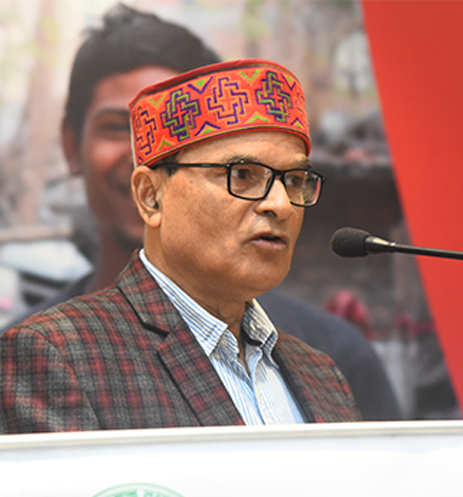
The Challenge Initiative (TCI) supports the implementation of proven, high-impact family planning interventions (HIIs) by strengthening the capacity of city governments.
There is a need to discuss steps to strengthen planning and health services. I invite TCI’s team from Uttar Pradesh (UP) to share their experiences and lessons learned from implementing HIIs in UP.
Dr. Birendra Prasad Singh, Director In Chief, Health Services
Jharkhand
In India, TCI holds “mini university” (mini-u) workshops where cities more experienced in implementing HIIs share their transformative effect with less experienced cities. When the National Urban Health Mission (NUHM) and family planning (FP) stakeholders in Jharkhand learned about these learning opportunities, they organized a joint mini-u workshop in November 2023 with PSI India to disseminate HIIs throughout the state.
The workshop included city officials from the TCI-supported cities of Ranchi, Bokaro, Deoghar, Dhanbad and East Singhbhum, as well as 17 cities not supported by TCI. Also in attendance were NUHM representatives and family planning stakeholders, including the Planning. The workshop also sought to support and prepare TCI Director in Chief (Health Services); the State Nodal Officers for the NUHM, Family Planning, and IEC; the NUHM’s State Program Manager and the State Coordinator- Family master coaches by facilitating knowledge acquisition from experienced coaches in high-performing cities.
During the workshop, Dr. Ranjit Prasad, NUHM’s State Nodal Officer, highlighted the need to build staff capacity to meet increasing urban population demands, while Dr. Pushpa, the State Nodal Officer for Family Planning, advocated for focusing on reversible family planning methods, postnatal family planning, and adolescent sexual and reproductive health. In addition, Dr. Lal Manjhi, the State Nodal Officer for IEC, urged workshop participants to engage fully and learn best practices from the experienced cities.
A special session on learning and takeaways from implementing TCI’s HIIs was conducted by Master Coach Dr. Jaskaran Singh Gangwar, an Additional Chief Medical Officer from Amroha, and Ahsan Ali, a District Urban Health Coordinator from Uttar Pradesh. They provided examples illustrating the successful implementation of HIIs in UP and discussed the potential for adopting similar strategies in Jharkhand.
Using UP as an example, Dr. Jaskaran highlighted how PSI India helped implement HIIs in the State and emphasized the importance of departmental convergence for success. Ali explained the referral mechanism and stressed the need for managers and coordinators to take responsibility.
Jharkhand city officials expressed curiosity about the strategies employed in UP to overcome challenges and enhance service quality. Their conversation covered topics such as the scarcity of skilled professionals, the role of fixed day services (FDS) in addressing the manpower crisis, the provision of intrauterine contraceptive device (IUCD) services at the UPHC level, the referral system, service convergence and coordination among different departments.
The mini-u prompted the NUHM to request TCI coaching and implementation of FDS in neighboring non-TCI-supported cities.
TCI’s Collaboration with OB-GYN Society Helps Further Strengthen Capacity in Three Indian States
Contributors: Dr. Sangeeta Goel, Deepika Anshu Bara, Hitesh Sahni and Deepti Mathur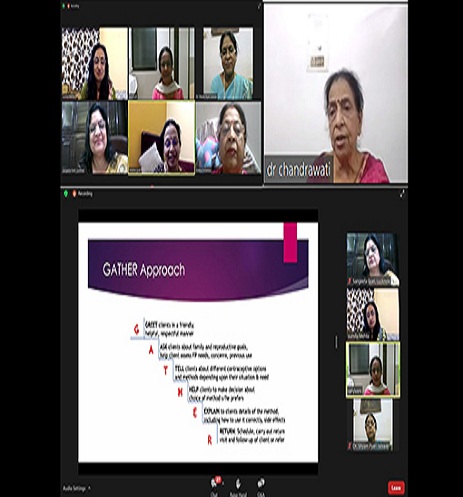
In collaboration with the Family Welfare Committee (FWC) and the District Obstetric & Gynecological (Obs/Gynae) societies of the Federation of Obstetric & Gynecological Societies of India (FOGSI), TCI India hosted a webinar series for its members and other service providers across the supported states of Uttar Pradesh (UP), Bihar and Jharkhand.
FOGSI is a national body of all registered obstetricians and gynecologists working in the public and private sector. It includes a membership base of more than 30,000 registered gynecologists. The webinar series offered contraceptive technology updates, clarified myths and misperceptions, and provided an opportunity for service providers to interact with some of the leading family planning experts in India.
Dr. Jyoti Vajpayee
TCI India
Family planning expert Dr. Jyoti Vajpayee appreciated the efforts of the FWC of FOGSI towards promoting family planning services. As part of her opening remarks, she stated that India has reached the replacement fertility level and that this medical fraternity of doctors, nurses, auxiliary nurse midwives (ANMs) and frontline workers deserves recognition for this achievement. She noted that government regulations and the work of agencies, like TCI India, have also helped in promoting spacing methods
This collaboration between TCI and FOGSI was mutually beneficial because FWC is charged with raising awareness and providing technical updates on the Government of India’s family planning program and external practicing bodies through its Sankalp Program. Aligning with this vision, the webinars were designed and led by FWC and District Obstetric & Gynecological societies with support from TCI that focused on coordination efforts between the national body with the district societies and invitees and identifying the thematic areas for the series, which included:
• Newer long-acting reversible contraceptives (LARCs) and limiting options
• Oral pills – benefits outweighs risks
• Procedures and devices
• Tailoring contraception and family planning counseling, where FOGSI FWC and other FOGSI stalwarts provided recent updates on FP methods and also clarified queries and concerns of providers.
The webinar series consisted of eight webinars that were attended by more than 1,000 service providers from 40 districts in UP, Bihar and Jharkhand. This translated to covering the following districts.
• 15 districts in UP: Lucknow, Kanpur, Moradabad, Shahjahanpur, Aligarh, Meerut, Mujaffarnagar, Mau, Agra, Prayagraj, Ayodhya, Firozabad, Varanasi, Bareilly and Etawah.
• 8 districts in Bihar: Patna, Bhagalpur, Purnia, Muzaffarpur, Darbhanga, Gaya, Sitamarhi and Katihar.
• 4 districts of Jharkhand: Ranchi, Jamshedpur, Bokaro and Dhanbad.
Some of the keynote remarks included hearing from:
• Shobha N. Gudi, Chairperson of FWC, FOGSI, who reminded members that counseling is very crucial and side effects resulting from any method, like menstrual irregularities and lower abdominal pain, must be explained to the client.
• Basab Mukherjee, Vice President, FOGSI, who discussed the significance of using the Medical Eligibility Criteria wheel, particularly for COCs, and under which circumstances they should be used with caution or avoided altogether.
• Madhuri A. Patel, Secretary General, FOGSI, who highlighted the need to extend quality family planning services to the last mile, and for this, she recommended building the capacity of service providers at the grassroots level – which this webinar series and TCI India is attempting to do in urban areas of UP, Bihar and Jharkhand.
• Shyam Pyari Jaiswar, President, Lucknow Obs/Gynae society, who highlighted critical points such as using the GATHER approach, method specific counseling, being non-judgmental and empathetic to clients and emphasized building capacity at all service providers’ levels.
The webinars were greatly appreciated by all participants – that is, members of FOGSI and the district societies. For example, Dr. Anita Singh, President-elect of AOGS, Bihar and Jharkhand, called for continued education through such webinars on more family planning related topics in the future.
Officials from Newest TCI State of Bihar Learn from Two TCI Model Cities – Lucknow and Agra
Contributors: Deepika Anshu Bara, Parul Saxena, Manish Saxena, Nitin Dwivedi, Vivek Malviya, Samarendra Behera and Hitesh Sahni
The Challenge Initiative’s (TCI’s) goal is to build resilient health systems by transferring capacity to local governments so that high-impact family planning (FP) and adolescent and youth sexual and reproductive health (AYSRH) interventions are sustained after a city’s engagement ends with TCI. TCI accomplishes this through a coaching methodology that coaches and mentors local governments in the implementation of these interventions. To build resilient systems, TCI India enlists the help of high-performing graduated cities – such as Lucknow and Agra in Uttar Pradesh (UP) – that received TCI support to become self-reliant, to start up new TCI states such as Bihar.
TCI’s successful coaching model sparked interest from senior state officials from the Bihar government, who requested a visit to these two UP cities to learn from their experience. The learning visit helped the State Health Society (SHS) of Bihar – which included the National Urban Health Mission’s (NUMH’s) State Program Manager, Deputy Director of FP, and the NUHM State Finance Manager from SHS Patna – to quickly accelerate their start-up process before the state begins efficiently and effectively scaling TCI interventions in seven cities.
TCI India
Bihar
Over the course of the two-day visit in May 2022, the Bihar team held deep dive discussions with the Joint Director, Family Welfare (Directorate, Govt. of UP) Chief Medical Officer (CMO), National Health Mission Family Planning (NHM – FP) team, District Program Manager, Additional CMO of FP, Medical Officer-In-Charge (MOIC), staff nurse, Auxiliary Nurse Midwife (ANMs) and Accredited Social Health Activist (ASHAs) in both cities to better understand the TCI program, its interventions – most of which closely align with the global High-Impact Family Planning Practices or “HIPs” – and how to achieve and sustain meaningful results.
The Bihar team was coached by TCI master coaches and other local government staff in Lucknow and Agra, who shared their experience and knowledge about implementation and the importance of public-private partnerships for better fixed day static (FDS) service delivery. They also heard how TCI empowered urban primary health centers (UPHCs) to significantly contribute to the urban family planning program through MOIC and urban staff nurse trainings on newer contraceptive methods (i.e., Antara and Chhaya) and IUCD insertion. Other expertise shared included the importance of data review and monitoring of urban indicators by first strengthening the capacity of ASHAs to prioritize potential couples by age and method user/non-user through use of the 2BY2 matrix tool.
During discussions with UP state government officials, the Additional CMO of FP from Lucknow explained how the evidence-based interventions introduced by TCI led to observable quantitative and qualitative changes in family planning in urban Lucknow.
A NMH-FP official in UP also shared what he saw as the most significant changes as a result of engagement with TCI: “TCI India, with their technical support, coached government officials at the state and the city level to strengthen the urban FP program, and tremendous achievements have already been seen. First, UP embraced FDS. Initially, PIP funding were available for FDS at UPHCs in 20 TCI India demonstration cities. Later, the state government expanded FDS as ‘Antral Diwas’ in over 75 districts, where the PIP funds are granted for quarterly meetings and orientations of ASHAs and ANMs. Secondly, the state government endorsed the evidence-based interventions and shared them with city officials for implementation.”
The Bihar team is now reviewing these learnings as it prepares to roll out the TCI India model in the state by investing resources to implement TCI’s interventions and improve family planning access and urban
TCI Supports Government-Led Family Planning Workshop for Kanpur Factory Workers
Contributors: Deepti Mathur and Parul Saxena
The Challenge Initiative (TCI) provides technical support to the Government of Uttar Pradesh to help reduce preventable maternal and neonatal mortality among the urban poor population by increasing the accessibility and availability of modern contraceptives. As part of this government-led initiative, TCI India recently joined forces with the Confederation of Indian Industries (CII) in an effort to engage the corporate sector to improve the quality of life of vulnerable populations living in UP slums and daily wage workers in large and small factories.
In April 2022, TCI India supported the Chief Medical Officer in Kanpur, CII’s Northern Region and the Shubham Goldiee Masale group (an Indian spice manufacturer) in holding a sensitization workshop at a Goldiee Masale factory in Kanpur. Forty female factory workers attended the workshop to learn more about reproductive and family planning needs and services, and how to access those services.
Dr. Kanchan Mala Gupta
Kanpur, Uttar Pradesh
Dr. Kanchan Mala Gupta – a TCI master coach who is also the Medical Officer In-Charge of the Dharipurwa Urban Primary Health Center, Arjun, and Divisional FPLMIS Consultant for the National Health Mission in Kanpur – facilitated the workshop and explained the benefits of family planning.
“Family planning enables women to make informed choices about their sexual and reproductive health. Having small families allows parents to invest more in each child. Children with fewer siblings tend to stay in school longer than those with many siblings.”
She detailed the advantages, effectiveness and side effects of each modern contraceptive method. She also made workers aware of the Accredited Social Health Activists (ASHAs) and Auxiliary Nurse Midwives (ANMs) in the community who can provide information and counseling services, and the various service delivery points (UPHCs, district hospitals, medical colleges, accredited private facilities, UHNDs) where they can get the method of their choice.
Sarita, a Goldiee Masale factory worker in Kanpur, attended the workshop: “This was the first time I attended an orientation session in the factory which was for the benefit of my health. I never took services from government facilities but now I would like to avail family planning service from a UPHC near to my place because now I know it provide range of and quality family planning services.”
Due to the overwhelming positive response to this government-led workshop – supported by TCI in collaboration with CII – the government plans more such family planning orientation workshops in other
PSI India, TCI’s Partner in India, Wins Prestigious Workplace Award
Contributors: Sanjeev Kumar Srivastava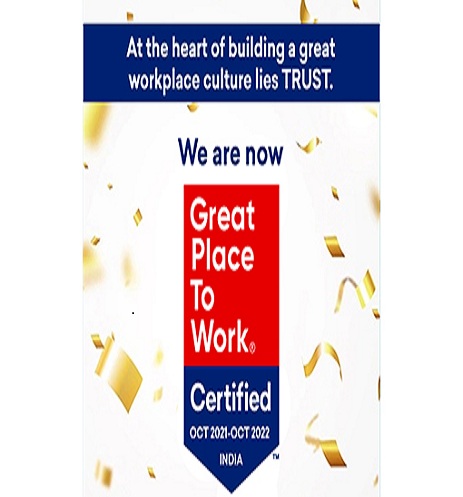
The Challenge Initiative’s (TCI’s) partner in India – Population Services International, India – has earned a Great Place to Work® Certification from the Great Place to Work® Institute.
The Great Place to Work® Institute carried out an independent survey across PSI India in September 2021 and found that 92% of those working for PSI India feel proud of their association with it; 87% believed in the credibility of management while the Trust Index is at 87%, followed by 85% employees reporting that PSI India is a fair place to work.
Sanjeev Kumar Srivastava
PSI India
On October 19, 2021, PSI India – a leading not-for-profit organization dedicated to improving the quality of life and well-being of the people in India – was designated a Great Place to Work – Certified™.
Great Place to Work® Institute is a global management research and consulting firm that works with over 10,000 organizations globally every year. This certification is a pioneer Employer of Choice recognition that organizations aspire to achieve, and is a Gold Standard in identifying and recognizing Great Workplace cultures.
TCI and its parent organization – the Bill & Melinda Gates Institute for Population and Reproductive Health – are proud to be working with PSI India to support the family planning and reproductive health needs of women and girls living in India’s poor urban communities.
Uttar Pradesh National Health Mission and TCIHC Develop Integrated Family Planning Media Campaign
Contributors: Deepti Mathur and Mukesh Sharma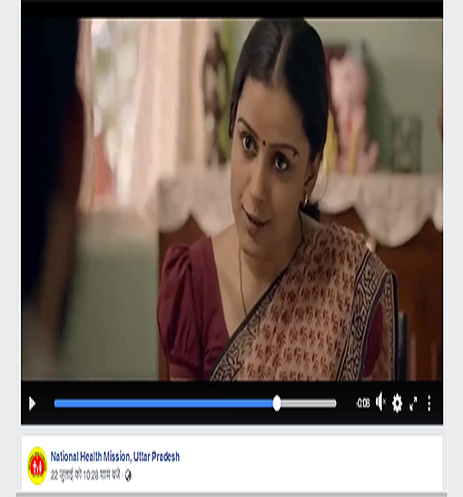
The Challenge Initiative for Healthy Cities (TCIHC) in India believes a positive attitude towards family planning is key to increasing the adoption of modern contraceptives by giving agency to women in decision-making. With this goal in mind, TCIHC collaborated with the National Health Mission in Uttar Pradesh (NHM-UP) to develop an integrated family planning media campaign aimed at young and low parity couples.
In July 2021, in coordination with World Population Day, the NHM-UP released the campaign featuring five video public service announcements (PSAs) on its social media platforms. The NHM, the Government of UP and the State Innovations in Family Planning Services Project Agency (SIFPSA) co-branded campaign has five method-specific spots, developed under the leadership of the NHM’s Mission Director.
NHM-UP
Uttar Pradesh
The package of five Hindi-language family planning videos has created a buzz and drawn the attention of several government counterparts, allied organizations and people in general. In a short period, NHM-UP’s Facebook page viewership has increased with the PSA on birth spacing trending at the top with more than 2,000 views, 500 likes and 150 comments.
The NHM-UP and TCIHC grounded the entire campaign within the concept of women’s empowerment. The videos position a dialogue between a husband and a wife that clearly shows the wife openly discussing contraceptives and asserting her voice. It aims to make contraceptives a symbol of freedom with a woman making her own choice regarding the number and spacing of her children – a choice that can significantly impact her health and well-being. The specific objectives of the campaign are to bring about behavior change in decision-making by actively involving women in the process, and to increase awareness about various modern contraceptive methods and dispel any myths or misinformation about them.
All five PSAa are free to air on all platforms, including television, cable, social media and static screening (i.e., cinema halls) for four years. Uttar Pradesh stakeholders believe this campaign is destined to give more power and agency to women when making a contraceptive choice.
TCIHC Hosts Mini University and Study Tour for New Cities in Uttar Pradesh
Contributors: Deepti Mathur & Parul Saxena
The Challenge Initiative for Healthy Cities’ (TCIHC) approach is locally owned, adaptable, results-driven and embeds coaching within the existing government health system in India to build the confidence of government counterparts to drive sustainable scale-up of family planning and adolescent and youth sexual and reproductive health (AYSRH) interventions.
TCIHC’s model triggered demand from the National Health Mission to expand into additional cities in Uttar Pradesh. In response, TCIHC hosted its first virtual Mini University (Mini U) to introduce its high-impact approaches (HIAs) to new city officials from Farrukhabad, Bulandshahr, Etawah, Rampur and Mau by sharing first-hand experience and lessons learned from their implementation in the high-performing cities of Firozabad, Mathura, Jhansi, Agra and Saharanpur. The objective of the Mini U was to share the transformative effect of the HIAs through experienced cities. In attendance were over 48 participants from new and old cities.
TCIHC
Firozabad, Mathura, Jhansi, Agra and Saharanpur, Uttar Pradesh
Across the five experienced cities, it was often repeated how coaching to strengthen leadership capacity along with the technical capacity to plan, implement and manage the HIAs was imperative in increasing access to quality family planning services. As a result, the experienced cities coached new cities by sharing personal experiences of implementing the proven solutions. Champions from Agra and Mathura captivated participants by sharing experiences of using TCI University (TCI-U) to access uniform guidance, resources and guidelines in the India toolkit and learn from other cities’ experiences in the form of the most significant change stories. District Urban Health Coordinator of Mathura shared: “TCI-U provides resources and high-impact tools which guide cities on implementing successful family planning and AYSRH interventions. These evidence-based tools are comprehensive and simple. I have earned numerous assessment certificates from TCI-U. In addition, the Family Planning Community of Practice (FP-CoP) group created by TCIHC fosters a learning and sharing environment between cities where new cities could also join and learn from each other’s experience.”
The District Urban Health Coordinator of Firozabad shared: “When we chose to partner with TCIHC, we received a package of high-impact tools. We executed FDS in ready-to-start facilities with high-performing ASHAs. The results were promising; thus, we introduced FDS in all UPHCs.”
Akash Gutam, District Urban Health Coordinator of Mathura coached all of the Mini U participants on crucial steps for strengthening urban ASHAs to reap benefits from this proven approach and critical cadre of frontline health workers. He shared: “Demand generation is the biggest challenge in an urban family planning program. TCIHC through on-site coaching and mentoring support coached urban ASHAs, MoICs and ANMs in reviewing and monitoring ASHAs’ performance. The high-impact tool, ‘Strengthening Urban ASHA’ has enhanced urban ASHAs’ skills, improved reporting and record maintenance not only for family planning but for other health programs as well.”
On the mapping and listing HIA, District Urban Health Coordinator of Firozabad explained the significance of this tool: “The biggest difficulty was to assess the accurate urban population and area. This tool helped to identify unregistered slums and populations. Based on the new demarcated area, we developed plans, reallocated ASHAs, assessed training needs and estimated funds required for additional ASHAs, infrastructure and resources. This approach is very effective to uncover unserved areas and ensures service provision to the most vulnerable and left out pockets of the population.”
Continuing to Improve Youth Access to Contraceptive Services in the Time of COVID-19 in India
Contributors: Deepti Mathur, Devika Varghese and Annette McFarland
Although the COVID-19 pandemic has disrupted access to family planning services around the world, the need for these services, particularly for adolescents and youth, remains the same. The Challenge Initiative for Healthy Cities (TCIHC) in India is working to ensure that adolescent and youth sexual and reproductive health (AYSRH) services continue to be available despite the pandemic.
To this end, TCIHC supported Rashtriya Kishor Swasthya Karyakram (RKSK) in Uttar Pradesh to develop COVID-19 guidelines for facility Adolescent Health Days, such as requiring all participants to wear masks and to maintain physical distance from others, so adolescents can continue to safely seek the health services they need during the pandemic.
Dr. Manoj Kr Shukul
Uttar Pradesh
Beginning in August, TCIHC-supported cities such as Saharanpur, Varanasi, Gorakhpur and Allahabad in Uttar Pradesh re-initiated facility Adolescent Health Days across 68 urban primary health care centers (UPHCs) for the first time since the COVID-19 pandemic impacted services in March 2020, when many in-person activities were halted. By September, 204 boys and 444 girls had participated in facility Adolescent Health Days in these cities.
In addition, TCIHC is providing technical assistance to RKSK to design social and behavior change messages to reach adolescents age 15-19 with targeted, age-appropriate health information. TCIHC developed messages on nutrition, sanitation and personal hygiene practices that aligned with RKSK monthly themes and addressed the COVID-19 pandemic. The messages were shared with adolescents via WhatsApp, a platform many adolescents in India access on their cell phones.
The nutrition and personal hygiene messages were also shared with district officials of 75 cities, including TCIHC-supported cities, other cities, and rural areas, so they can distribute the messages through official channels. All the messages were also tweeted by Dr. Manoj Kr Shukul, the General Manager of the National Health Mission in Uttar Pradesh.
Empowering India’s Frontline Health Workers with COVID-19 Prevention Messages
Contributors: Mukesh Sharma, Deepti Mathur and Lisa Mwaikambo
India is the world’s second most populous country, with more than 1.3 billion residents. Ensuring that young women and girls have access to family planning is central to the country’s future development, paving the way for more educated communities and a healthier population. But COVID-19 has placed a heavy burden on India’s health system, which now has to care for patients suffering from coronavirus, test people for the virus and other conduct other allied services.
Many health facilities have been converted into dedicated COVID-19 centers, which means fewer facilities for services such as family planning. Getting messages out to vulnerable populations, such as the urban poor, as to where they can seek family planning services is crucial. Also crucial is protecting frontline health workers that deliver those messages.
ASHAs, ANMs
Uttar Pradesh
The Challenge Initiative for Healthy Cities (TCIHC) in India has supported the Government of India (GOI) in Uttar Pradesh (UP), Madhya Pradesh (MP) and Odisha by developing self-care messages for its frontline health workers, including urban Accredited Social Health Activists (ASHAs) and their supervisors, Auxiliary Nurse Midwives (ANMs).
TCIHC adapted existing GOI information, education and communication materials related to COVID-19 with content specifically for ASHAs and ANMs that integrates family planning messages. The materials instruct ASHAs to take appropriate precautions during field work while reinforcing their important role in helping women avert unwanted pregnancies. Given the lockdown restrictions, TCIHC facilitated this adaptation and finalization of the materials with the GOI through existing WhatsApp Groups.
Once finalized, state officials shared the materials – which were developed in Hindi and customized for all three states – via existing WhatsApp groups of the National Urban Health Mission (NUHM) with urban primary health centers (UPHCs), ASHAs and ANMs.
Given that ASHAs see many clients who prefer birth spacing methods, TCIHC also incorporated messages that encouraged them to replenish and carry their stock of condoms and pills during household visits. TCIHC city teams also coached ASHAs to do telephone follow-up with IUCD clients and help injectable clients get their next dose from a nearby facility. In addition, TCIHC has developed an e-learning module for ASHAs that guides and mentors them on family planning counseling that was tested during the COVID-19 lockdown period. The insights gained were incorporated into the module, which will be rolled out across all TCIHC-supported cities in May.
More than 3,500 state and city government officials and 11,000 ASHAs and ANMs in UP, MP and Odisha (6,190 in TCIHC-supported cities) have been reached with these critical messages to ensure continuity of family planning services during the pandemic. TCIHC continues to regularly provide technical assistance and coaching to its government counterparts and frontline health workers remotely through WhatsApp
Uttar Pradesh and Madhya Pradesh Officially Endorse Nine of TCI’s Proven Approaches for All Cities
Contributors: Mukesh Sharma, Hitesh Sahni, George Philip and Parul Saxena
The state governments in both Uttar Pradesh (UP) and Madhya Pradesh (MP) have officially endorsed nine of The Challenge Initiative for Healthy Cities’ (TCIHC) proven approaches that are being used to successfully implement family planning activities in 20 UP cities and eight MP cities. This means TCIHC’s approaches are now available for use in all cities throughout both states (75 total in UP and 47 total in MP).
TCIHC works with the Government of India (GoI) in both states (and Odisha) to implement the following approaches, which were proven effective under the Urban Health Initiative in India (2009 – 2015) and have been adapted for inclusion in TCI University (TCI-U).
TCIHC’s
Uttar Pradesh (UP) and Madhya Pradesh (MP)
• Mapping and Listing Urban Slums
• Convergence
• Fixed Day Static Services/Family Planning Days
• Strengthening Urban Accredited Social Health Activists (ASHAs)
• Strengthening Provider Capacity
• Using Data Effectively
• Private Sector Engagement
• Planning and Budgeting: Program Implementation Plan
• Engaging Mahila Arogya Samiti (MAS)
In UP, these approaches have so far resulted in:
• 1,310 slum clusters identified resulting in 1.8 million slum residents being linked to health and family planning services in 20 cities.
• 363 Urban Primary Health Centers (UPHCs) organizing weekly fixed-day static services (family planning days) and 329 UPHCs providing intrauterine contraceptive device (IUCD) services for the first time.
• 81% (294) of those UPHCs forming quality improvement teams and assessing service gaps on regular basis.
• District quality assurance committee (DQAC) members visiting UPHCs to assess facility readiness for family planning services for the first time.
• Increased uptake of family planning services at UPHCs and family planning referrals from urban health and nutrition days (UHNDs) and outreach camps (ORCs), as a result of coaching and mentoring of urban ASHAs.
• Increased uptake of non-scalpel vasectomy (NSV) as a result of TCIHC’s male participation approach, which resulted in 82 men receiving NSV in just 22 days across 10 cities.
On Feb. 27, 2019, the UP government and the GoI’s National Health Mission (NHM) along with TCIHC – led by Population Services International (PSI) – organized a one-day “State Conclave on Urban Family Planning” for cross-sharing and learning related to challenges and solutions for improving access, choice and quality of family planning services among the urban poor. The event was attended by 230 participants comprising representatives from the Government of India (GoI) and Uttar Pradesh, along with other stakeholders.
In partnership with TCIHC, NHM is scaling up proven approaches to increase access to and demand for family planning to over 20 million people across 20 large UP cities, covering 70% of the state’s total slum population.
At the event, Prof. Rita Bahuguna Joshi, the Honorable Minister of Family Welfare, Mother and Child Welfare for UP; Sri Pankaj Kumar, Indian Administrative Service, Mission Director NHM & Secretary Health in UP; and other dignitaries’ unveiled TCIHC’s toolkit featuring the nine high-impact approaches. Joshi shared that the high-impact approaches are quick, easy-to-adapt strategies that can improve accessibility and use of family planning services. She also said implementing these approaches can help reduce the state’s fertility rate, which is much higher than national average. She urged family planning programs across the state to adapt the tools in their respective programs.
The Government of UP’s endorsement means that the approaches and tools are now approved for use by all government health officials in UP, which will diffuse TCIHC’s impact beyond its 20 cities to an additional 55 cities in UP. Check out the summary report to learn more about the conclave proceedings.
A similar event just held in Madhya Pradesh, India, on May 2, 2019, resulted in the nine approaches – plus an additional one on establishing a referral mechanism – being endorsed by the MP government, thus extending the potential reach beyond the eight TCIHC-supported cities to an additional 39 cities.
Ushering in a New Era of Public-Private Family Planning Partnerships in Uttar Pradesh, India
Contributors: Deepti Mathur and Mukesh Sharma
The Government of India’s National Health Mission has had a clearly defined policy since 2006 for engaging private health care facilities to provide family planning services under public-private partnerships. Despite this policy, private sector participation has been lukewarm. TCI’s implementing partner in India, Population Services International (PSI), often asked senior members of the Federation of Obstetrics and Gynaecological Societies of India (FOGSI) why private providers did not participate more actively in the national family planning program. They usually said if there were a hassle-free engagement mechanism, its members would happily engage and contribute to the national agenda of family planning. They also said they weren’t seeking large profits but just wanted their own costs to be adequately covered.
Balancing the needs of women to access quality and affordable family planning services with supply is not always an easy task because family planning services for poor women are typically limited to overloaded public sector facilities while the nearest, well-equipped, clean private facility is often out of their reach. To address this supply and demand issue, PSI partnered with other stakeholders and development partners to support Government efforts to make family planning services available to all women as a matter of health rights.
Hausala Sajheedari Program
Uttar Pradesh
This led to the creation of the Hausala Sajheedari Program which was conceptualized together with the National Health Mission, the government of Uttar Pradesh (GoUP), State Innovations in Family Planning Services Project Agency (SIFPSA) and other family planning partners in Uttar Pradesh. Modeled on an e-governance system, Hausala Sajheedari is a web-enabled digital platform for accrediting private health care providers (an essential precondition for engaging in the strategic purchase of family planning services by the state), and empaneling private sector family planning surgeons (which indemnifies them against family planning procedures). The entire online system was designed to minimize the direct human interface by introducing an end-to-end online solution from application to approvals, reimbursement claim submissions to online payments with built-in transparency and accountability.
Hausala Sajheedari effectively replaced the traditional paper-based application process, which was a tedious, non-transparent herculean task that dissuaded most private sector providers from participating. While this model has shown remarkable early success, it still hasn’t realized its complete potential. Of the 876 facilities accredited under Hausala Sajheedari, only about 30% actively participate in the program, while about 70% remain dormant, despite being registered.
“I am willing to provide family planning services but I don’t have the bandwidth to move around in the community to look for clients. The amount reimbursed (INR 2000/- reimbursed as facility/procedure cost for every sterilization client served) hardly covers my basic costs so I cannot pump in my money to do community mobilization and advertisement,” said one provider in explaining why he does not participate.
The facilities that did participate were benefitting from the demand generation activities of several development partners supported by external donors. This – like any other non-government-led project – was not a sustainable model in the long run. Thus, the demand generation gap in the private sector emerged as one of the biggest gaps in creating a long-term sustainable solution for meeting the family planning needs of women.
In seeking a solution, the project looked at the nature of private providers and realized most were stand-alone private clinics and family planning was not their core business. The private-sector facilities primarily served walk-in clients and hardly engaged in any client mobilization efforts. Evidence shows very few clients walk in on their own for family planning services, particularly those in a lower socio-economic segment. While the demand generation model of the government uses a large network of frontline health workers called Accredited Social Health Activists (ASHAs) who act as first point of contact in facilitating family planning and other health services. The current government policy allows ASHAs to only refer clients to the public sector and not to the private sector.
The solution was to advocate for a change in government guidelines that would allow the ASHAs and other front line health workers to refer clients to private-sector facilities so the client not only has a choice of family planning methods but also where she can avail that service.
PSI and a few other development partners have been on the forefront of advocating for this important policy change with government leadership at the centre as well as state level. Many decision-makers agreed in principle to the benefit of shifting the policy, but were unwilling to act on it. This stemmed from the potential risk of cannibalisation of clients by private sector, as well as a lack of clear evidence for making such a drastic change. When TCIHC launched in May 2017, a senior health official made it clear that they would not make the change unless the benefit of doing so were proven and potential risks were mitigated. However, he indicated that if a state government were to agree to test this model and document the evidence, results and learnings, the Indian government would consider revising the guidelines.
PSI along with SIFPSA requested the Mission Director of the National Urban Health Mission in UP to allow a proof of concept around this issue. With consistent engagement, the UP government leadership agreed to test it by layering it on the already successful Hausala Sajheedari platform for family planning services. The Mission Director agreed to pilot this demand aggregation model in five districts with high total fertility rates (TFR), which were also the chosen districts for the government’s existing Mission Parivar Vikas, a family planning program focused on urban populations.
With additional resources made available under Mission Parivar Vikas plus the technology solution to protect against any potential financial malpractice, the right combination was found to demonstrate the proof of concept of this new demand and supply model. The UP NUHM entrusted SIFPSA to lead the implementation of the pilot, while PSI is the designated technical partner to support the intervention including documenting results and learnings. The implementation cost of more than $200,000 (USD) will be leveraged from SIFPSA.
This advocacy win gives hope that the model will lead to a nationwide scale-up of a similar model by allaying mistrusts and fears in private sector engagement. If proven successful, this demand aggregation