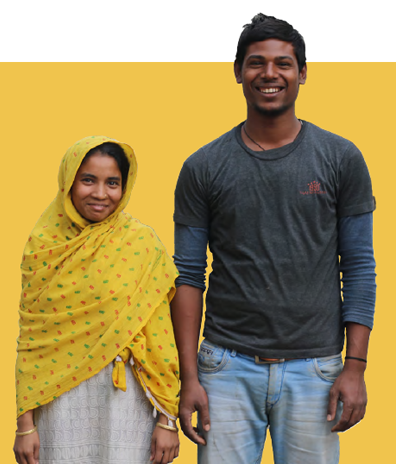
ASHA Helps a Young Mother Survive Severe Anemia and Access MNCH Services
Dhara delivered a healthy baby girl. When I went to see her after delivery, tears welled up in her eyes. She thanked me not for helping her have a safe, normal delivery. She was very happy because after two sons, the birth of her daughter felt like a long-awaited blessing.”
During a MAS supported group meeting for pregnant women, Babita noticed a pale and fragile young woman, 26-year-old, Dhara Raj, pregnant with her third child. Concerned, Babita visited her home and learned that Dhara, barely a month into pregnancy, was already struggling with extreme weakness. Her husband Aakash did not understand the seriousness of her condition.
Babita convinced the couple to visit the District Women’s Hospital. The diagnosis was alarming, Dhara’s hemoglobin level was just 6 g/dL. The gynecologist warned that continuing the pregnancy posed severe risks. While Dhara felt confused and scared, Aakash insisted on continuing.
As a trained PSI India coachee, Babita acted quickly. She discovered Dhara had never registered for antenatal care. She immediately facilitated her ANC registration and accompanied her to the hospital for urgent anaemia treatment. Even when Dhara experienced nausea and vomiting after starting medication, Babita took her to the UPHC, where the medical officer in-charge patiently counselled her on the importance of continuing supplements and adopting a nutritious diet.
With Babita’s support, Dhara regained strength, completed all four ANC check-ups for the first time, and consistently took iron and calcium, something she had missed in previous pregnancies.
Dhara delivered a healthy baby girl. With tears in her eyes, she thanked Babita for safeguarding her life and helping her welcome a daughter she considered a blessing after two sons. After counselling, Dhara also opted for a postpartum IUCD and pledged to ensure complete immunization for her newborn.
PSI India through The Challenge Initiative (TCI), strengthens MNCH services across intervention cities by building the capacity of ASHAs equips them to identify high-risk pregnancies, ensure early ANC registration, counsel on nutrition and supplements, and support families.